
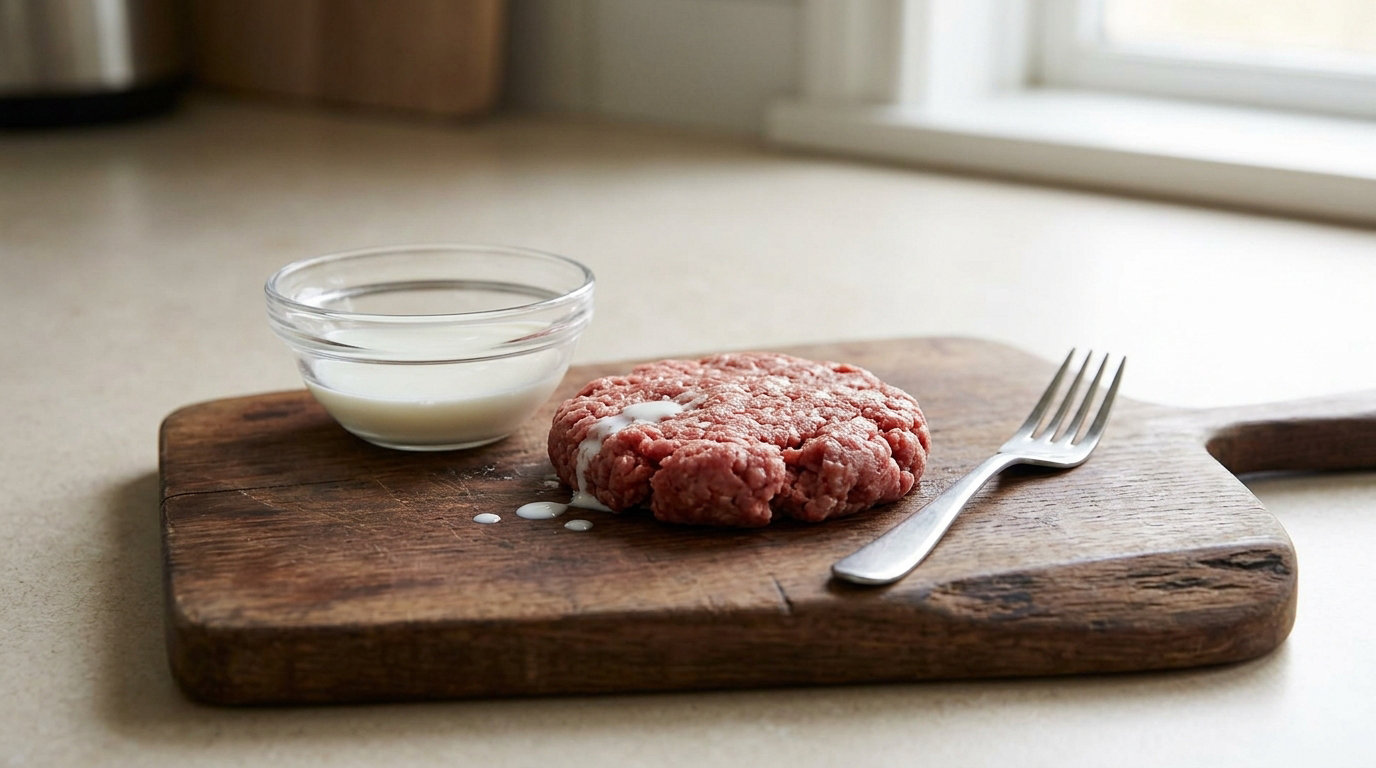
Milk makes burger patties tender by adding a small amount of liquid to the meat, which holds moisture in the finished patty and keeps lean ground beef from drying out as it cooks. Used in the right amount, it also feeds a panade of breadcrumbs that binds the mix and softens the texture. Used in the wrong amount, it turns a good burger into a soggy one.
I’ve cooked patties both ways plenty of times, and the difference shows up in the first bite rather than the last. The trick is knowing which burger you are making, because a 90/10 lean patty cooked well done is the case where a tablespoon of whole milk earns its place, and a fatty smash patty seared hard is the case where it does nothing useful.
There is a range where milk genuinely helps, a range where it does almost nothing, and a range where it makes things worse. The gap between those ranges is narrower than most recipes admit, and the fat ratio of your beef matters more than anything you pour into the mix.
Table of Contents
- Why Milk Makes Some Burger Patties Tender: What It Actually Does
- How Milk Works in a Burger Patty
- What Does Milk Do During Cooking?
- Why Milk Helps Some Burgers but Not Others
- How Much Milk Should You Add to Ground Beef?
- How to Add Milk Without Making Burger Patties Mushy
- Milk vs. Other Burger Tenderizers
- Common Myths About Milk in Burger Meat
- Frequently Asked Questions
- Conclusion
Why Milk Makes Some Burger Patties Tender: What It Actually Does
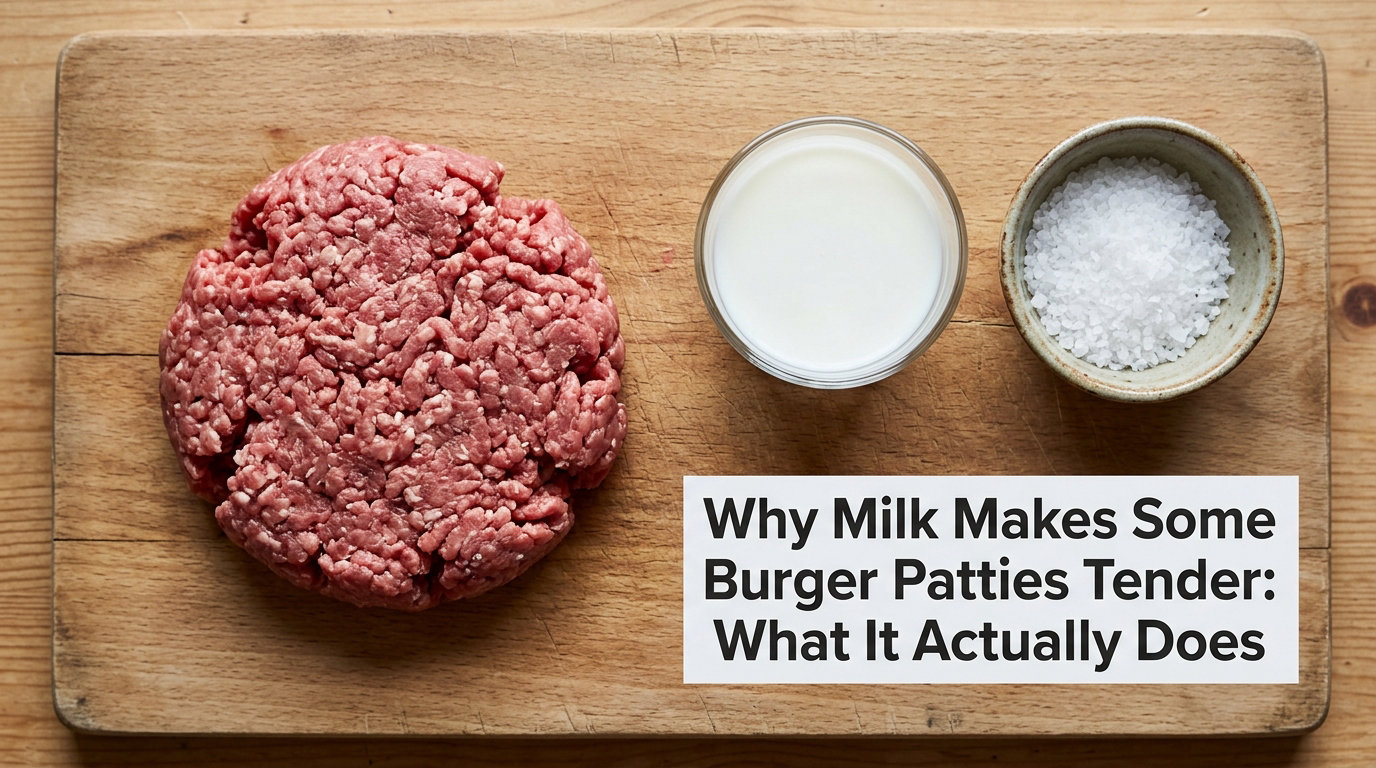
Three separate effects are going on, and most home cooks only ever notice the first one.
- It adds moisture. Ground beef squeezed to 10 percent fat has little of its own water to hold on to, and it loses more on contact with a hot pan. Milk water is extra water held in the mix.
- It feeds a panade. Soaked breadcrumbs swell into a starch and protein paste that holds the patty together and slows moisture escaping.
- It improves texture. A hydrated panade makes a patty that stays juicy through medium-well and well done, instead of turning springy.
There is a fourth effect people claim, enzyme tenderizing, that gets repeated in every forum thread and almost always gets overstated. I’ll deal with that further down.
How Milk Works in a Burger Patty
Cow’s milk is roughly 87 percent water, and that water is doing most of the work. The rest is about 3 percent protein, mostly casein, and about 4 percent fat, plus a little lactose sugar.
The casein proteins bind the mixture
Casein is not an egg protein and it does not set into a gel the way egg white does. It sits around and between the ground meat particles and helps them stick together, which is why a patty with soaked bread in it holds its shape on the grill instead of shedding a corner into the coals.
The fat lubricates the bite
Whole milk contributes real fat, around a third of a teaspoon per tablespoon. That small amount coats the muscle proteins and keeps them from contracting hard as the patty cooks, which is the mechanism behind chewiness in cooked meat. Lean beef has nothing to spare on that front, so the fat milk brings is doing real work there.
The water increases what’s available
The added water is what the breadcrumbs drink, and what keeps the finished patty from squeezing itself dry. This is the main reason why milk makes burger patties tender in practice.
Why this is not marinating or soaking
Ground beef has no long fibres to break down the way a steak does. A tablespoon of milk stirred in for thirty seconds is a binder, not a cure. Leave beef sitting in milk and you get a wet, grey, faintly sour mix, not a tender one.
What Does Milk Do During Cooking?
As heat comes up, the milk proteins coagulate first, around 140 to 150 F, which is well before the beef itself is anywhere near cooked. The breadcrumbs swell and set into a soft matrix, and the added water stays trapped inside that matrix instead of migrating to the surface.
That water does not stop the patty from browning, either. The crust still forms, and the sugars in the milk and the Maillard reaction on the beef surface still do their work. If anything, a dampened surface browns a little more slowly, which is one reason a patty heavy on milk can look pale before it develops a proper crust.
Whatever milk is in there, ground beef still needs to reach 160 F internally to be safe. Milk has no effect on that, and it is not a shortcut past a thermometer. Check the thickest part of the patty, not the edge.
Why Milk Helps Some Burgers but Not Others
Milk is a fix for a specific problem, and if your patty doesn’t have that problem, adding it is just added water.
Why milk makes burger patties tender on lean beef but barely on fatty beef
The single biggest factor in whether a burger is juicy is the fat ratio, and no amount of milk replaces it. A 90/10 lean patty loses water quickly and goes dry quickly, and that’s exactly where a tablespoon of milk per pound gives you the most return. An 80/20 patty has enough intramuscular fat to stay juicy on its own, so milk adds little you can taste.
How much you mix matters more than what you add
This one gets repeated in nearly every cooking forum and it is the single most common mistake I see. Mixing ground beef, even gently, breaks down the meat proteins and squeezes liquid out of the mix. Work it too long and the patty goes dense, grey and springy, and no quantity of milk will undo that.
Two gentle folds, then stop. If the patty falls apart, the mix was too loose, not too wet.
Burger style decides everything
Thick restaurant-style patties cooked to medium benefit from a wet binder. Thin smashed patties cooked hard and fast do not, because the fast cook leaves the interior barely warm and the extra water just makes the spread harder to control.
Milk cannot make a burger safe
People sometimes describe milk as making a patty “better cooked.” It does not. It is a moisture and texture tool, and food safety is still time and temperature.
How Much Milk Should You Add to Ground Beef?
The general rule is one tablespoon of milk for every 450 g of ground beef, and less for fatty meat. Measurements below cover a typical home batch.
| Batch size | Milk (whole or 2 percent) | Buttermilk |
|---|---|---|
| 450 g / 1 lb of beef | 1 to 2 tablespoons / 15 to 30 ml | 1 tablespoon / 15 ml |
| 900 g / 2 lb of beef | 2 to 3 tablespoons / 30 to 45 ml | 2 tablespoons / 30 ml |
| 1.4 kg / 3 lb of beef | 1/4 cup / 60 ml | 3 tablespoons / 45 ml |
| 1.8 kg / 4 lb of beef or a meatloaf | 1/3 cup / 80 ml | 1/4 cup / 60 ml |
If you are also using a panade, count the milk that soaks the breadcrumbs as part of your total. A quarter cup of milk soaking 30 g of breadcrumbs, added to a pound of beef, is already at the top of the sensible range.
Here is what happens at each level of addition.
| Amount per 450 g of beef | Resulting texture | Best used for |
|---|---|---|
| No dairy | Dense, clean beef flavour, most searing | Fatty 80/20 beef, smash patties, steakhouse style |
| 1 to 2 tablespoons | Slightly softer, noticeably more forgiving | Lean 90/10 patties, thicker burgers, meatball style patties |
| 3 to 4 tablespoons | Soft, bready, needs a proper sear to taste good | Meatloaf, kofta, deliberately soft patties |
| Half a cup or more | Mushy centre, patty falls apart in the pan | Nothing worth cooking |
Signs you have gone past the line are simple. The mix will not hold a shape, it will feel greasy rather than tacky, and it will ooze liquid onto the board the moment you form it.
How to Add Milk Without Making Burger Patties Mushy
- Measure it out first. Never pour straight from the carton. A tablespoon is a tablespoon, and the carton gives no clue how much that is.
- Combine it with the breadcrumbs first. Let the bread drink the milk for a minute or two so the water is held in the panade rather than sitting loose in the meat.
- Add it to cold meat. Cold beef and cold milk keep the fat solid and the mix workable. Warm meat melts the fat and turns the mix greasy before it ever hits the pan.
- Fold gently, then stop. Two or three gentle turns, no kneading, no food processor. The “don’t overwork the meat” rule recurs in every cooking forum for a reason.
- Chill the formed patties before cooking. Thirty minutes in the fridge lets the panade set and the fat firm up, which is what keeps the patty together on the grill and improves browning.
Patties made this way also freeze well. Form them, chill them fully, lay them on a tray to freeze solid, then bag them. Thaw them in the fridge overnight rather than in the pan, and cook from cold with a minute or two added.
Milk vs. Other Burger Tenderizers
Milk is one option among several wet binders, and each behaves differently in the mix.
| Binder | Added fat | Added protein | Flavour change | Mushy risk | Best for |
|---|---|---|---|---|---|
| Whole milk | Low | Moderate | Slightly sweet, dairy | Medium past 4 tablespoons | General purpose, lean beef |
| Buttermilk | Low | Moderate | Tart, more noticeable | Medium | Meatballs and kofta, where tang suits the dish |
| Egg yolk | High | High | Rich, binds very well | Low in small amounts | Thin patties where you want no fall apart |
| Breadcrumbs soaked in milk | None | Low | Bready, panade | High if soaked too long | Meatloaf and meatball style patties |
| Plain yogurt | Low to medium | Moderate | Very sour | High if any quantity is generous | Keema, kebab style, where sour is wanted |
| Ice water | None | None | Neutral | Medium | Lean beef and sausage meat, where you want no dairy flavour |
For a plain beef burger, milk and ice water do a similar job. Ice water adds the moisture with no dairy flavour at all, which is why many butchers use it, and it is the better pick if you want to keep the taste purely beef.
Buttermilk is closer to milk than it looks, with a little more protein and a real acidity. The acid works on the surface proteins, which gives a slightly springier, lighter patty rather than a softer one. It suits a meatball more than a classic hamburger.
Egg yolk is the opposite choice: it adds fat and binds aggressively, so a single yolk in a lean patty gives structure without turning it bready. The trade-off is a richer, more cakelike texture rather than a cleaner burger.
Common Myths About Milk in Burger Meat
Myth: the enzymes in milk tenderize the meat
This is the most repeated claim in the cooking forums and it is the least accurate. Fresh cow’s milk does not contain a meaningful amount of active protease, and fresh milk has no rennet in it. The enzyme story is true of something else, namely the rennet used in cheese making, which is why aged cheese and buttermilk show up in some traditional marinade recipes. Fresh milk in a patty tenderizes through water, protein and fat, not through enzymes.
Myth: milk always makes a burger better
It does not. On an 80/20 patty you will taste nothing but dilution, and on a thin smash patty the extra water makes the meat harder to spread evenly. Milk helps on lean beef cooked past medium, and mostly just sits there in the other cases.
Myth: milk stops patties sticking to the pan
The dairy in the mixture is a tiny fraction of a percent of the total. A cast-iron griddle seasoned properly, or a wire rack over a sheet pan, does far more for sticking than a tablespoon of milk.
Myth: milk improves browning
It does the opposite, mildly. Surface moisture slows the crust, and the pale cast that a wet patty picks up in the first minute of cooking is a real thing. A dry patty and a hot pan will always beat a wet patty and a moderate pan.
Myth: milk can stand in for salt and seasoning
It cannot. Milk carries flavour but does not salt the meat, and underseasoned beef tastes of nothing whatever. Salt the mixture lightly, mix it in, and let the patties rest before cooking so the salt has time to spread.
Frequently Asked Questions
Does milk actually make ground beef tender?
Partly, and not for the reason most people think. Milk is around 87 percent water, and that water plus a little fat keeps lean ground beef from tightening up and squeezing out moisture as it cooks. The tenderness you taste comes from added moisture, a little fat, and a panade of soaked breadcrumbs, not from enzymes. On a fatty 80/20 patty you will barely notice it.
What type of milk works best in burger patties?
Whole or 2 percent milk is the usual choice, and the difference between them is small. Whole milk contributes a little more fat, which helps most on lean beef, but the water is doing the bulk of the work either way. Avoid skim, which adds water with almost nothing to show for it, and avoid sweetened milk, which burns on the outside of the patty.
Is buttermilk better than regular milk for burgers?
Not for a classic hamburger. Buttermilk carries more protein and a noticeable acidity, and that acid works on the surface proteins to give a lighter, springier texture. That suits meatballs, kofta and keema, where a slight tang belongs. For a plain beef patty you want to taste beef, regular milk is the quieter option.
Does adding milk make burger meat fall apart?
It can, and the cause is usually quantity rather than milk itself. A mix that will not hold its shape, feels greasy instead of tacky, and leaves water on the board has gone too wet. Stay near one to two tablespoons per 450 g of beef, combine the milk with breadcrumbs first, and fold it in only a couple of times.
Can milk replace an egg in a burger mixture?
Partly. Milk and an egg do different jobs. Egg yolk adds fat and binds tightly, so it is the better choice when the goal is a patty that will not break on a thin grill. Milk adds water for moisture. If your problem is patties falling apart, an egg yolk will help more. If your problem is dry beef, milk will help more than an egg.
Does adding milk stop burger patties from sticking to the pan?
Barely. The dairy in the mix is a very small fraction of the total, so it has almost no effect on sticking. Season the pan well, get it properly hot before the patty goes down, and use a wire rack over a sheet pan for thick patties. Those steps do far more than a tablespoon of milk ever will.
Conclusion
Milk makes burger patties tender by adding water that a panade of breadcrumbs can hold, plus a small amount of fat that keeps lean muscle from contracting into a chewier bite. The effect is real on lean beef and cooked past medium, negligible on fatty beef, and negative in large amounts.
If you want to try one thing, take a pound of 90/10 ground beef, add one tablespoon of whole milk, fold it in twice, and stop. Chill the patties for half an hour and then cook them gently to 160 F. You will get a juicier burger than salt and pepper alone, and you will not have turned the mix into paste.