
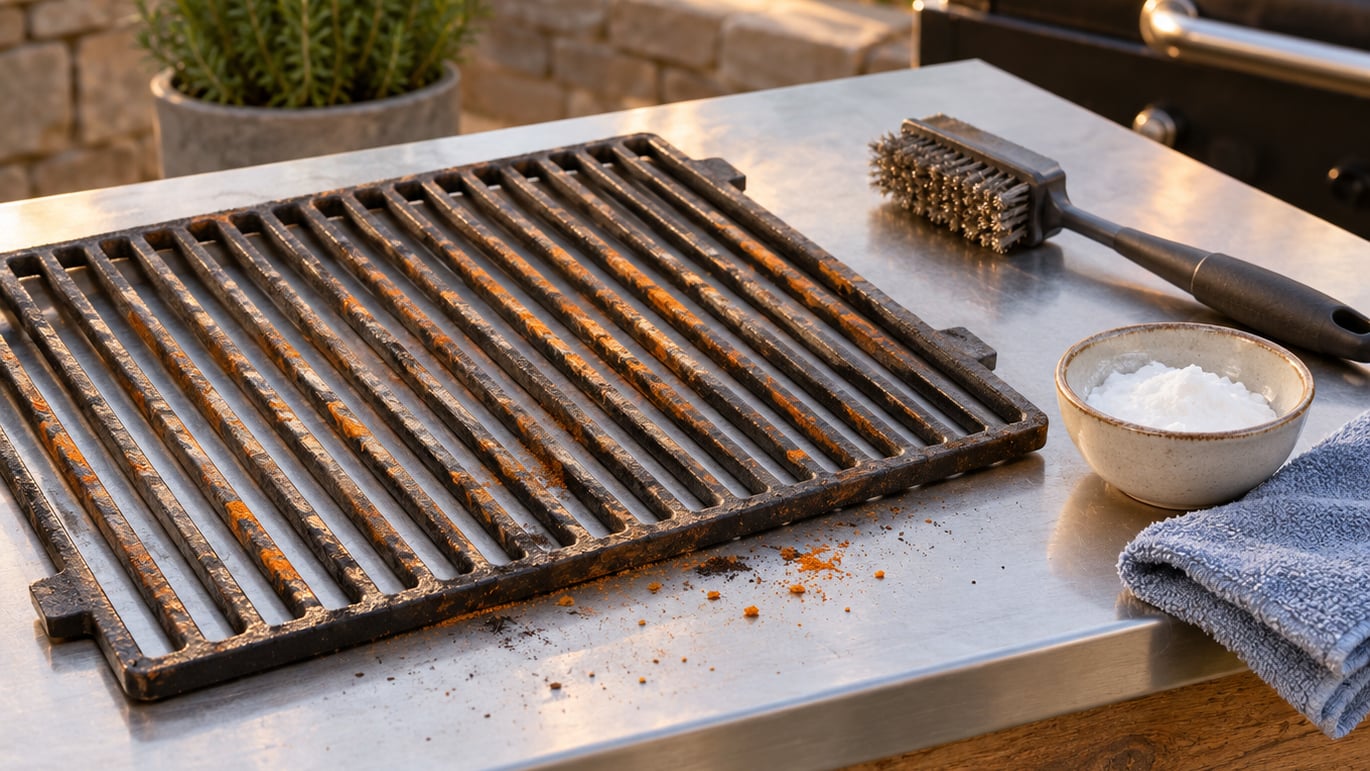
How to remove rust from grill grates without replacing them takes a wire brush, a paste, a thin coat of oil and about an hour of unhurried work. Light surface rust is only iron oxide, and most of it lifts off at home once you know the order to do things in: let the grate cool, scrub the loose rust away, loosen what is left, rinse, dry it fully, then oil and heat it back to a seasoned surface.
Is it safe to cook on rusty grates? Yes, mostly. A grill running at 400F burns off bacteria and anything else that rode in on the grate, so the real problem with rust is flavor and flake, not safety. Grate owners on r/webergrills say it plainly: the heat makes the grates safe. Deep pitting or rust that flakes away in sheets is a different story, and that grate is done.
The method you pick depends on what the grate is made of and how bad the rust is. Stainless steel takes a harsher scrub than porcelain-coated, and cast iron needs re-seasoning afterward no matter what. Get that match right before you start, and the job takes far less elbow grease than most guides suggest.
What You Need
The grate has to be completely cool before any of this starts. Turn the burners off, close the propane tank valve if you have one, and follow the shutdown steps in your grill’s manual. A grate that is still warm will bake cleaner into the metal and set the rust, and a hot grate plus a wet brush is a burn.
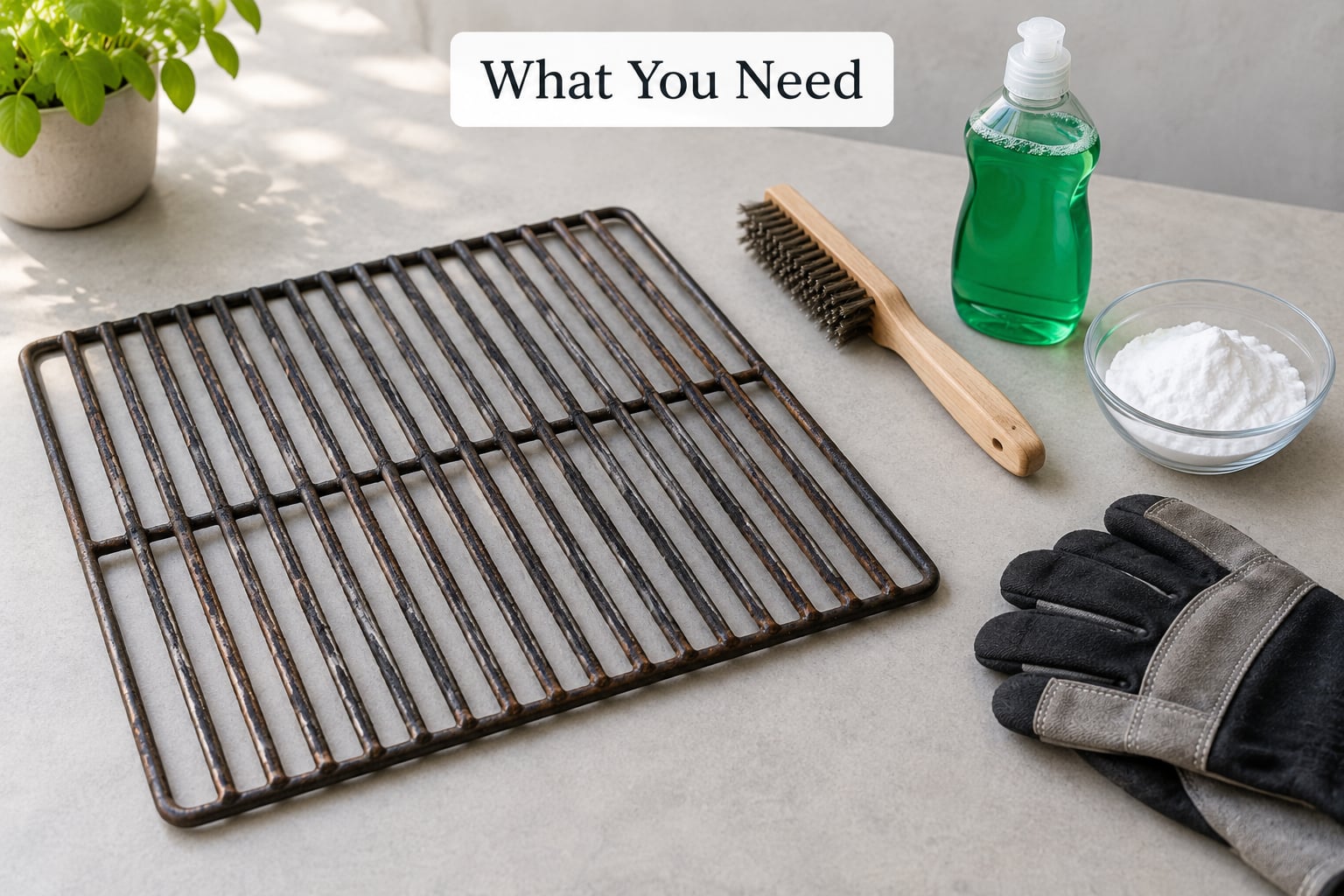
For most home grates the full kit is small:
- A wire grill brush or a stiff-bristle brush that is not metal
- A grill brick or nylon scrubber for coated surfaces
- Baking soda, about half a cup
- Plain dish soap and a bowl of water
- White vinegar, one to two cups, if you want an acid soak
- A high smoke point oil such as canola, grapeseed or avocado
- A paper towel or clean cloth for oiling
- Heat-resistant gloves and eye protection
Brush choice is where people wreck a good grate. On bare cast iron and stainless steel, a stainless wire brush or a chain-mail-style scrubber works fine. On porcelain-coated or ceramic-coated grates, use a brass brush with golden bristles or a nylon grill brick; a steel brush will scratch the coating off in patches and the bare iron underneath will rust faster than before.
Steel wool belongs to bare cast iron only, and only for the heaviest rust. On a coated grate it strips the finish in about ten seconds of scrubbing.
Step-by-Step: How to Remove Rust from Grill Grates
1. Cool the Grill and Check the Rust
Run the grill off, shut the fuel source per the manufacturer’s instructions, and let the grate cool until you can hold a hand near it without flinching. Set the grate on a towel outside or in the sink, not on your counter.
Now look at it honestly. Surface rust is orange-brown, rubs off on your finger or a cloth, and leaves the metal flat underneath. That is worth cleaning. Pitting is different: the metal has gone soft and cratered, it feels like coarse sandpaper, and rust crumbles off in flakes. Pitting, rust bleeding through at the mounting points, or a bar that flexes when you lift it all mean one thing, replace the grate.
2. Scrape Off Loose Rust and Grease
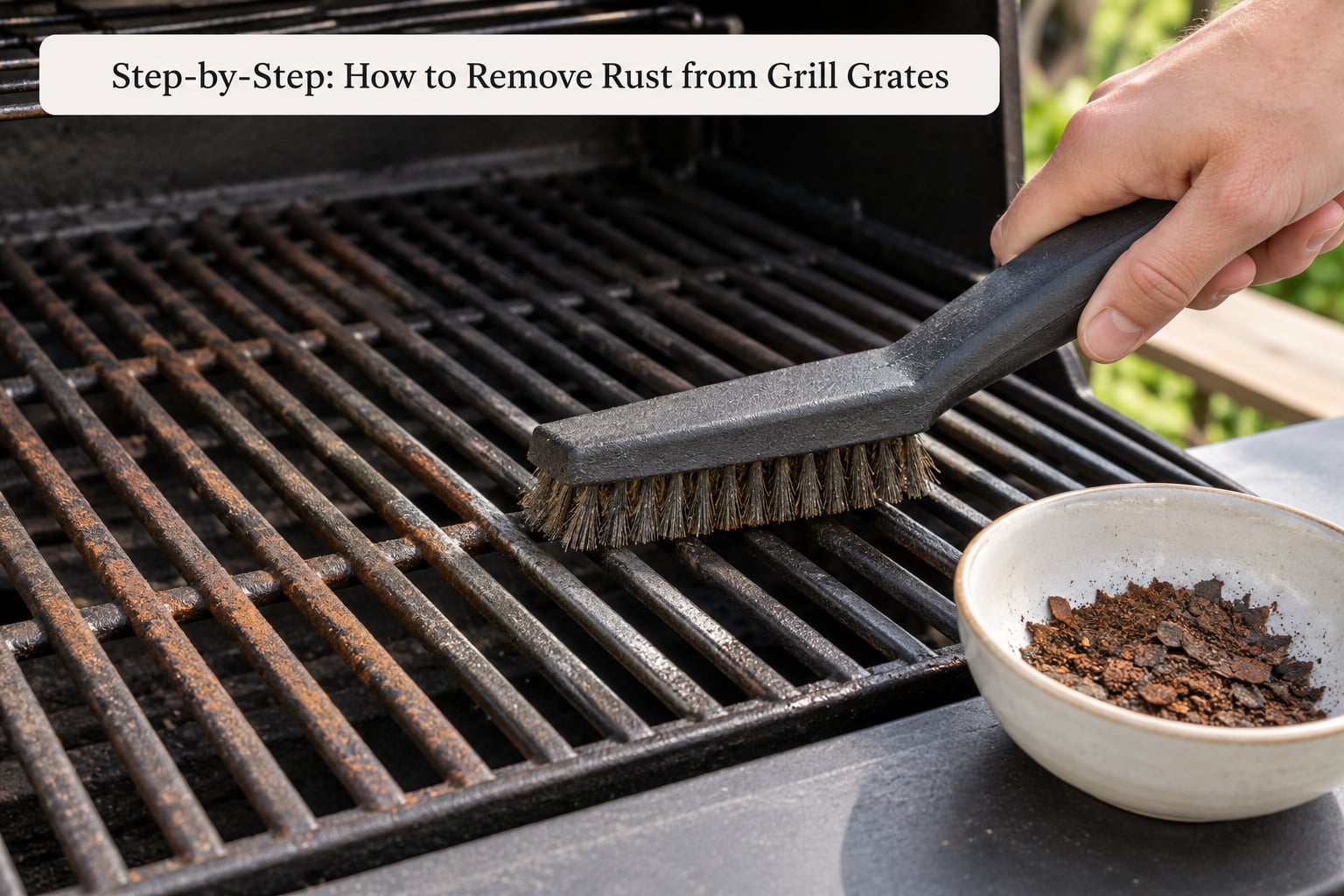
With the grate cool, lay it flat and drag the wire brush along the bars in the direction the metal was rolled. Strokes going with the grain leave the surface smoother; cross-grain scrubbing is what bends bars and rounds off the edges.
Use firm, repeated strokes instead of one heavy press. Most of the light orange rust disappears right here in a couple of minutes, and now you can actually see how much rust is bonded to the metal rather than sitting on top of it. Wipe the debris away with a damp cloth before it gets wet.
A short high-heat burn-off works here too if the rust is stubborn. Set the burners on high with the grate in place for 10 to 15 minutes, let it cool, then brush. That is the top-voted technique over on r/grilling, and it works because heat expands the scale so it flakes instead of smearing.
3. Use a Baking Soda or Grill-Cleaner Paste
Mix baking soda with a few drops of dish soap and just enough water to make a thick, spreadable paste. It should hold its shape on the grate without sliding off. Spread it over every rusty patch and along the full length of the bars, then leave it for 30 minutes.
Baking soda is a mild abrasive, so it does the scrubbing work for you while you do something else. For heavier rust, a cleaner labeled for grills and cooking surfaces works better than baking soda, applied exactly as the label says and rinsed thoroughly afterward.
If you would rather use an acid, mix white vinegar and water 50/50 in a container large enough to lay the grate flat in it. Light surface rust needs 20 to 30 minutes. Moderate rust needs a few hours. Deep pitting benefits from an overnight soak sealed in a large garbage bag, which is the trick longtime BBQ forum users use when their grate will not fit in any pan they own.
Do not mix vinegar and baking soda into one fizzing paste. The acetic acid and the soda neutralize each other, the fizz you see is the reaction finishing, and what is left is weak baking soda in soapy water. Use the acid first, scrub and rinse, then use baking soda afterward as a neutralizer and abrasive. In sequence they work. Combined they mostly waste an afternoon.
Whatever cleaner you use, wear gloves, open a window or work outside, and never mix an acid or acid-based cleaner with bleach or ammonia.
4. Scrub the Rust from the Grate
Now is the moment to scrub. Rinse the grate or wipe off the paste, then work across it with a stiff brush, following the grain of the bars. A crumpled ball of aluminum foil is a surprisingly decent stand-in for a brush on bare metal, and a piece of foil with dish soap will shift light rust without any tool at all.
On coated grates, this is where the brass brush earns its keep. Golden brass bristles cut through rust without touching the porcelain, and the coating comes out looking matte instead of chalked. Keep the pressure moderate and let the grit do the work.
You will know it is done when the metal is an even grey-black with no orange patches and no gritty texture under your fingernail. Rinse as you go if you are using the foaming foil method, since the slurry carries loosened rust away and gives you a clean read on the surface.
5. Rinse, Dry, and Re-Season
Work is not finished until the metal is bone dry. Acid left behind continues to etch the metal and you will find pits in a month. Rinse with hot water, then either air-dry with the grate propped up or dry it thoroughly with a microfiber cloth or a paper towel.
Only then rub a thin coat of high smoke point oil onto every bar with a paper towel. Wipe off the excess; you want the metal to look barely damp, not shiny. Put the grate back on the grill and heat it at 350 to 400F for 15 to 30 minutes until the surface turns evenly dark and gives off a faint smoke. Let it cool and wipe once more. That is a seasoning layer, and it is what keeps the rust from coming back.
If you are using a two-zone fire anyway, the burn-off half of the grill makes a good place for that seasoning pass. How to set up two zone heat on a grill covers the setup in about a minute.
Common Mistakes
- Cleaning a warm grate. Heat sets rust and bakes cleaner into the metal. Fix: shut the fuel down, let the grate cool to room temperature, and work outside or over the sink.
- Steel wool on porcelain-coated grates. It strips the coating in seconds and exposes raw iron that corrodes faster. Fix: brass brush, nylon scrubber or grill brick on anything coated.
- Mixing vinegar and baking soda into one paste. They neutralize each other and the fizz is the reaction ending. Fix: acid first, then baking soda as a separate step.
- Soaking for days. Long acid soaks keep dissolving good metal along with the rust. Fix: 20 to 30 minutes for flash rust, a few hours for moderate, one night for heavy pitting.
- Skipping the dry step. Water trapped under a seasoning coat causes the rust you just removed to come back within weeks. Fix: heat or towel-dry until completely dry before oiling.
- Seasoning without removing the loose rust first. You just sealed the rust under a new coat. Fix: brush and rinse first, oil second, always in that order.
- Leaving acidic cleaner in place. Vinegar or acid-based cleaners will keep eating at bare metal. Fix: rinse until the water runs neutral, then neutralize with a baking soda rinse if the label calls for it.
- Using caustic oven cleaner on a grate. The fumes are serious and residue has to be removed completely. Fix: if you go this route, do it outside with a window open and treat the grill as needing a full day of rinsing before use.
Most guides on how to remove rust from grill grates stop after the re-seasoning step, and that is where people rush. Once the grate is seasoned, take your time bringing the first burgers up to temperature. How to control flare ups on a grill covers the drip-and-drip technique that keeps a fresh grate from smoking.
Knowing how to remove rust from grill grates is the easy half. Rust on the grill body, side panels or burner cover is a separate job. Scrape the flaking paint and rust with a wire brush on the surface, then repaint with a high-temperature grill paint once the metal is bare and dry. Do not paint over active rust; it will blister off within a few hot cooks.
The prevention routine takes about two minutes after each cook: brush the grate while it is still warm, push it off the burners so it dries, rub it with a light coat of oil, and put a breathable grill cover over the whole grill. Salt air works harder on a grill than people expect, so a coastal grill that sits uncovered will flash rust over one winter no matter how carefully you cook on it.
Frequently Asked Questions
Can baking soda remove rust from a grill grate?
Yes, but treat it as a mild abrasive rather than a dissolver. Mix baking soda with a little dish soap and water into a paste, spread it over the rusty areas, and leave it for about 30 minutes. Then scrub with a stiff brush. Baking soda will shift light surface rust on bare cast iron or stainless steel, but it will not touch deep pitting. For heavy rust, pair it with a 50/50 vinegar and water soak first, or use a cleaner labeled for grills.
Is vinegar safe to use on a rusty grill grate?
Yes, white vinegar is one of the safest rust removers you can use on a grill grate. It is a mild acid, it is food safe, and it rinses away clean with water. Mix it 50/50 with water, soak 20 to 30 minutes for light rust or a few hours for heavier rust, then scrub and rinse thoroughly. Wear gloves, work in ventilated air, and never combine vinegar with bleach, ammonia or oven cleaner.
Do I need to replace a grill grate if it has surface rust?
No. Surface rust is iron oxide sitting on top of the metal, and a wire brush plus oil removes it completely. Clean it before your next cook and season it afterward. Replace the grate only when the metal is pitted and rough under your fingernail, when rust flakes off in sheets, when it has bled through at the mounting points, or when a bar bends or breaks. At that point the metal is compromised and cleaning will not restore it.
How do I clean rust off cast iron grill grates?
Start with a stainless wire brush along the grain of the bars to knock off loose rust. Then soak the grate in a 50/50 mix of white vinegar and water for 30 minutes at a time, scrubbing between soaks, and repeat until the orange is gone. Rinse with hot water, dry completely, then rub a thin coat of high smoke point oil over every bar and heat the grill to 350 to 400F for 15 to 30 minutes to build a new seasoning layer.
What is the safest way to remove stubborn rust from grates?
A sealed overnight soak in a large garbage bag, filled with a 50/50 vinegar and water mix, is the gentlest route for stubborn rust. It softens the scale without leaving the grate submerged in acid for a full day, and it works for grates too large for any pan you own. Follow it with a stiff brush, a hot rinse, a full dry, and a re-seasoning bake at 350 to 400F. Avoid steel wool on coated grates, and never mix an acid cleaner with bleach.
Conclusion
To remove rust from grill grates without wrecking the coating, start with the grate off the grill and fully cold. Scrub the loose rust off with a wire brush, loosen what is left with a baking soda paste or a 50/50 vinegar soak, scrub, rinse with hot water, dry it completely, and rub on a thin coat of high smoke point oil before heating it to 350 to 400F for 15 to 30 minutes.
Check your grill’s care instructions before you start, because coated grates have their own rules about which tools to keep far away from them. And if the grate is pitted, flaking or rusted through where it mounts to the frame, skip the cleaning and replace it.
Once it is seasoned, two minutes after every cook keeps it that way: brush, dry, oil, cover. That is the whole routine, and it is what keeps a grill you will still be cooking burgers on in a few years. Small grates and camp setups make the same routine apply in a tighter space, as covered in how to grill burgers on a portable grill.