
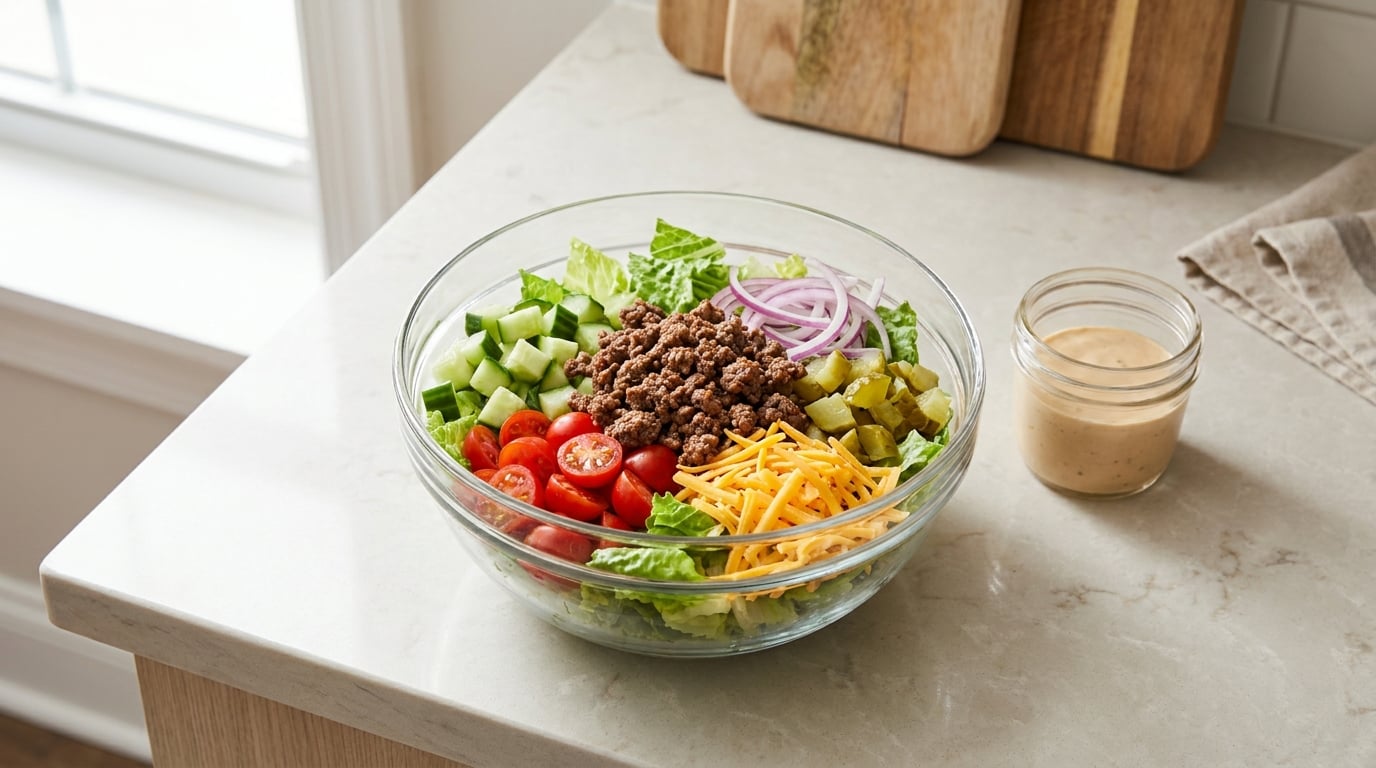
A burger salad bowl is a cheeseburger taken apart and rebuilt in a bowl: seasoned ground beef, crisp lettuce, chopped pickles, shredded cheese and a creamy special sauce where the bun used to be. If you want to know how to make a burger salad bowl that actually tastes like the fast-food craving it is replacing, the whole thing comes down to browning the beef properly, chopping the vegetables while it cooks and dressing the bowl at the last second. It takes about 20 minutes of active work and serves four.
The reason I keep making this instead of a plate of lettuce is that the bowl solves the boring-salad problem. There is a hot savory layer, a cold crunchy layer and a creamy sauce tying both together, so nothing sits there dry and ignored.
What You Need
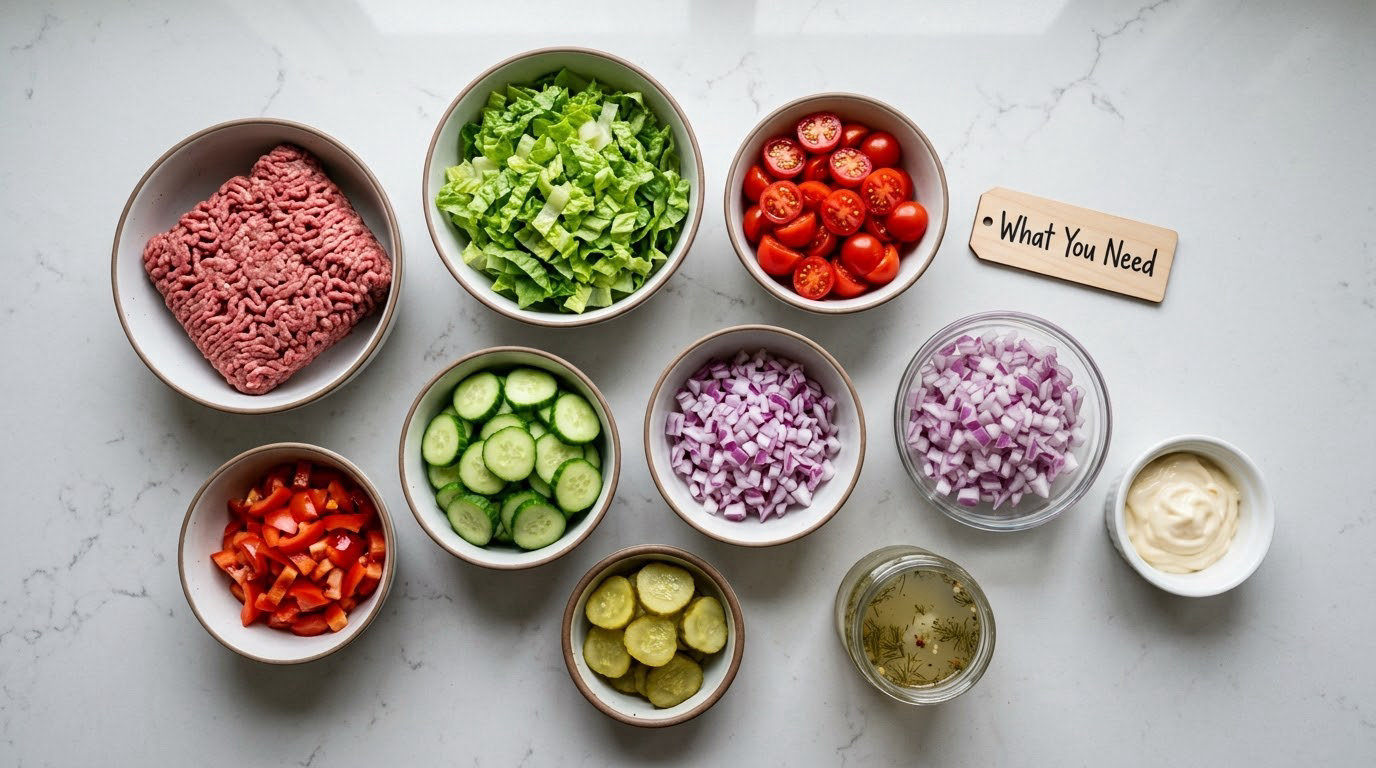
A burger salad bowl needs five groups: the beef, the greens, the burger toppings, the sauce and something crunchy. Everything here is available at a normal grocery store, and most of it can be prepped ahead while the beef cooks.
For the beef (serves 4)
- 1 pound (450 g) ground beef, 80% lean or leaner
- 1 teaspoon fine salt
- 1 teaspoon black pepper
- 1 teaspoon garlic powder
- 1 teaspoon onion powder
- 1 teaspoon smoked paprika or regular paprika
- 1 tablespoon Worcestershire sauce, optional
- 1 teaspoon vegetable oil, for the skillet
Do not drain the beef unless you like dry burgers. The rendered fat is what keeps the crumbled meat tender and carries flavor into the bowl. If you are using 93% lean beef, add a tablespoon of olive oil to the pan so the crumbles brown instead of steam.
For the salad base
- 2 heads romaine hearts, chopped (about 3 cups)
- 1 cup cherry tomatoes, halved
- 1 English cucumber, diced, or 1 regular cucumber
- 1/2 small red onion, thinly sliced, then soaked in cold water
- 1/2 cup shredded cheddar or a Monterey Jack and cheddar mix
- 1/2 cup dill pickle slices, chopped
- 1 avocado, sliced or diced, optional
For the special sauce
- 1/2 cup mayonnaise
- 2 tablespoons ketchup
- 1 tablespoon pickle brine or dill pickle juice
- 1 teaspoon yellow mustard
- 1 teaspoon distilled white vinegar, if you have no brine
The pickle brine is the part that makes it taste like a burger and not just a mayo dip. A three-to-one mayo-to-ketchup base gives you the cream and the sweetness, and a tablespoon of brine swaps sharp vinegar for actual pickle tang.
For the crunchy element
- 1 cup baby potatoes or sweet potatoes, cut into 1/2-inch cubes, or frozen sweet potato fries
- 1 tablespoon olive oil
- 1/2 teaspoon salt
The potatoes are not optional if you want the bowl to feel filling. A bunless burger has no carb, and without one most people find themselves hungry an hour later. Air fryer at 400°F (205°C) for 15 to 18 minutes, shaking twice, or a sheet pan at 425°F (220°C) for 25 to 30 minutes, gives you the crunch that a lettuce bowl is otherwise missing.
Which lettuce works best in a burger salad bowl
Romaine is the default because it survives dressing, but it is not the only option.
| Lettuce | Crunch | How it holds up | Best for |
|---|---|---|---|
| Romaine hearts | High | Very good | The classic burger bowl |
| Iceberg | Highest | Excellent, almost no wilting | Meal prep and crunch lovers |
| Green leaf | Medium | Fair | Milder flavor |
| Spring mix | Low | Wilts fast | Bowls eaten within 15 minutes |
| Arugula | Medium | Wilts fast | Adding peppery bite |
Substitutions that work: iceberg for romaine if you are packing lunch, butter lettuce if you want a softer bowl, and chopped kale massaged with your fingers for thirty seconds if you want it to hold up for two days.
Tools
A wide skillet so the beef browns instead of steams, a sharp knife for the pickles and onion, a large bowl for tossing, and a salad spinner or clean towel for drying lettuce. Drying is the step people skip, and it is the step that decides whether your bowl is crisp or a puddle.
How to Make a Burger Salad Bowl: Step-by-Step
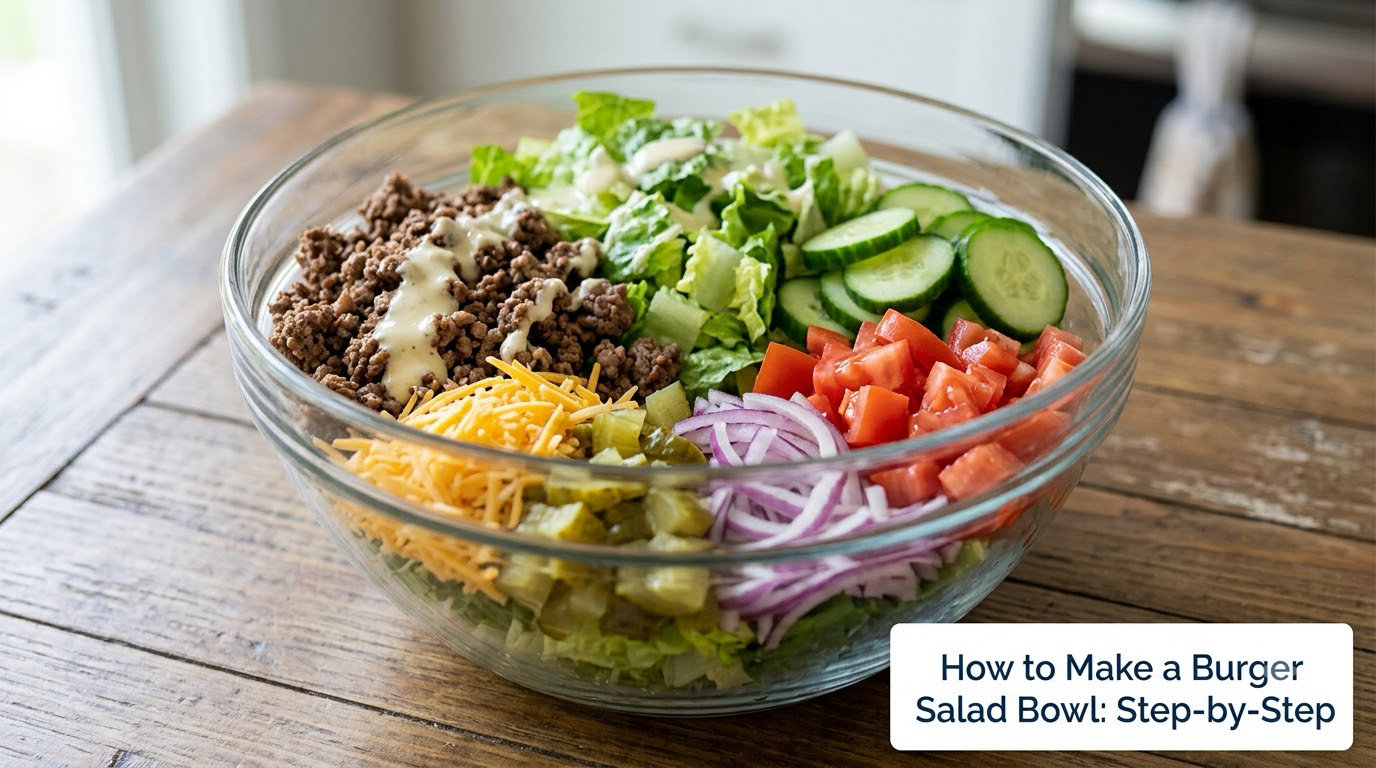
Start the potatoes first, since they take the longest, then work in layers. Six steps, and every one of them has a cue so you know it is done.
1. Crisp the potatoes at 400°F (205°C)
Toss the cubed potatoes with olive oil and salt, then air fry for 15 to 18 minutes or roast at 425°F (220°C) for 25 to 30 minutes. They are ready when the edges are deep golden and a piece shatters between your fingers. Leave them on the pan, not on a towel, so the steam does not soften the crust.
2. Dry and chop the vegetables
While the potatoes cook, wash the romaine and dry it thoroughly, then chop it into bite-size pieces. Halve the tomatoes, dice the cucumber, chop the pickles and slice the onion.
For raw red onion that does not bite, cover the slices with cold water and leave them five minutes, then drain and pat dry. The water pulls out the sulfur and the bowl tastes rounder.
Add the avocado last, right before serving, so it stays creamy rather than brown.
3. Mix the special sauce while the beef cooks
Stir together 1/2 cup mayonnaise, 2 tablespoons ketchup, 1 tablespoon pickle brine, 1 teaspoon mustard and the pepper you used on the beef. Taste it on a chip. It should read sweet first, then tang, then a faint saltiness at the end.
Thin it with a teaspoon of water if you want a drizzle, or leave it thick if you plan to toss the whole bowl. Store-bought dressings lean too sweet or too heavy, and this takes ninety seconds.
4. Brown and season the ground beef
Heat the skillet over medium-high, add the oil, then the beef. Let it sit untouched for two minutes so it develops a crust, then break it up with a wooden spoon and continue until the pieces are browned and the pan juices have cooked down.
Drain off any excess grease if you want a lighter bowl, then add the salt, pepper, garlic powder, onion powder, paprika and Worcestershire sauce. Stir and let it cook another minute.
Ground beef is done at 160°F (71°C) internal temperature, and that is the number that matters for food safety. If you have a thermometer, push it into a clump. Without one, the clumped pieces should be dark brown with no pink remaining.
5. Layer the bowl, dressing on last
Put the dry romaine at the bottom, then the beef, then the cucumber, tomato, onion, pickles, cheese and potatoes in that order. Wet vegetables go near the bottom and dry, crunchy things stay on top so they stay crunchy.
Drizzle the sauce over everything just before you eat, and toss only the top layer lightly so the lettuce underneath does not wilt.
6. Store and reheat safely
For meal prep, store the sauce in a separate small container and keep the lettuce, vegetables and potatoes apart from the beef in an airtight container in the fridge. Use it within three to four days, and only reheat the beef and the potatoes.
Reheat the beef in a skillet over medium heat for three to four minutes until it hits 160°F (71°C) again, or microwave it on high for 60 to 90 seconds. Lettuce does not go near a microwave; it turns to slime. Cooked ground beef also freezes well for up to three months, so you can brown a double batch and portion it out flat in freezer bags.
Common Mistakes
Watery vegetables ruin the bowl
Salad releases water once you add salt and dressing, and that liquid pools at the bottom and turns the lettuce soft. Pat your tomatoes and cucumber dry after cutting, and add them only a few minutes before serving. If you are prepping ahead, keep the tomatoes in their own container.
The beef comes out dry and crumbly
Overcooked ground beef loses its fat and goes dusty. Use 80% lean rather than 93%, cook over medium-high rather than high, and stop as soon as the color is right. A light drizzle of Worcestershire sauce in the pan also helps.
The bowl tastes bland
Almost always a seasoning problem. Salt and season the beef in the pan instead of only at the table, and check the sauce before it goes on. A pinch of smoked paprika in the beef and a spoonful of pickle brine in the sauce fix most flat bowls in seconds.
It turns into a pile of wet salad by lunch
Three things cause this. The lettuce was not dry, the sauce was added too early, and the tomatoes were cut too soon. Pack the sauce separately, spin the lettuce properly, and add the tomatoes on the morning you eat it.
The bottom is soggy and the top is bland
This is a layering problem. Dressing on the bottom of a bowl pulls water out of the lettuce right where you eat first. Put the sauce on top, or toss just the top two inches with a fork and leave the rest alone.
The bowl is not filling enough
That is what the potato or a bean layer is for. Buns removed means the carb went with them, so add the roasted potatoes, a scoop of beans, or a second serving of beef if you are training hard. Members of cooking forums building these for high-protein meals commonly add a carb component for exactly this reason.
Too heavy to finish
Go lighter on the sauce and skip the avocado, then add more cucumber, tomato and greens. A quarter cup of dressing per serving is plenty; you can always pour more at the table.
Serving and meal prep tips
Pair the bowl with something that does not compete with it. A small side of roasted sweet potato fries, a cup of tomato soup, or a light bean salad all work, and a sparkling water with lemon handles the richness of the sauce better than a heavy drink.
For make-ahead, cook the beef and crisp the potatoes on Sunday, store the dressing on the side, and keep the raw vegetables separate and undressed. Assembling four bowls on Wednesday takes about two minutes per bowl.
Vegetable and vegetarian versions work with the same sauce. Cook black beans with onion, garlic, smoked paprika and a pinch of salt and cumin until they have some texture, and season veggie burger crumbles more aggressively than you would a plain beef patty, since they are bland on their own.
Frequently Asked Questions
Can I use a lettuce wrap instead of a burger patty?
Yes. Skip the beef entirely and use lettuce leaves as the wrap: spoon sauce onto a leaf, add chopped pickles, onion and shredded cheese, then top with a few spoonfuls of seasoned beans or cooked veggie crumbles. The trick is adding a carb, so include the crispy potatoes on the side. Serve the leaves on a plate with the sauce on the side so they stay crisp until the last second.
What vegetables work best in a burger salad bowl?
Cucumber, cherry tomatoes, red onion, pickles, bell pepper and avocado are the usual lineup because they hold up well against a strong dressing. Shredded cabbage and carrot slaw add crunch and bulk, and chopped lettuce hearts stand in for romaine. Skip watery produce like melon or soft tomatoes, and add delicate greens only right before serving so they do not wilt.
Can I make a burger salad bowl ahead of time?
Yes, if you keep the parts separate. Cook the beef, crisp the potatoes and mix the sauce up to four days ahead, storing each in its own airtight container in the fridge. Keep the lettuce washed, dried and undressed, and store the tomatoes whole or uncut if you can. Assemble the bowl in the morning, adding the sauce and avocado at the very end.
How do I keep the salad from getting soggy?
Dress it at the last second and store the sauce separately. Lettuce wilts fast when salt and acid hit it, and a bowl packed in the morning with dressing already on it will be wet by lunch. Spin or pat the lettuce dry, add tomatoes and cucumber just before eating, and layer the crunchy toppings above the wetter vegetables so nothing underneath steams itself soft.
Is a burger salad bowl healthier than a traditional burger?
It usually is, mainly because there is no bun. A burger salad bowl built on 4 ounces of 80% lean beef, two cups of greens and a quarter cup of dressing lands around 400 to 450 calories with roughly 30 grams of protein, compared to roughly 550 calories for a single cheeseburger with its bun. The trade-off is that the classic version often includes more cheese and sauce, so portions decide the difference.
Conclusion
A burger salad bowl comes together in three moves that matter: cook the beef until it is browned and reaches 160°F (71°C), chop and dry the vegetables while it cooks so nothing gets watery, and add the sauce at the very last second so the lettuce and potatoes stay crisp. Everything else is just assembly.
Start by preheating your air fryer or oven to crisp the potatoes, then pull out one pound of ground beef and a head of romaine. Those two items are the whole meal in about four minutes of chopping.